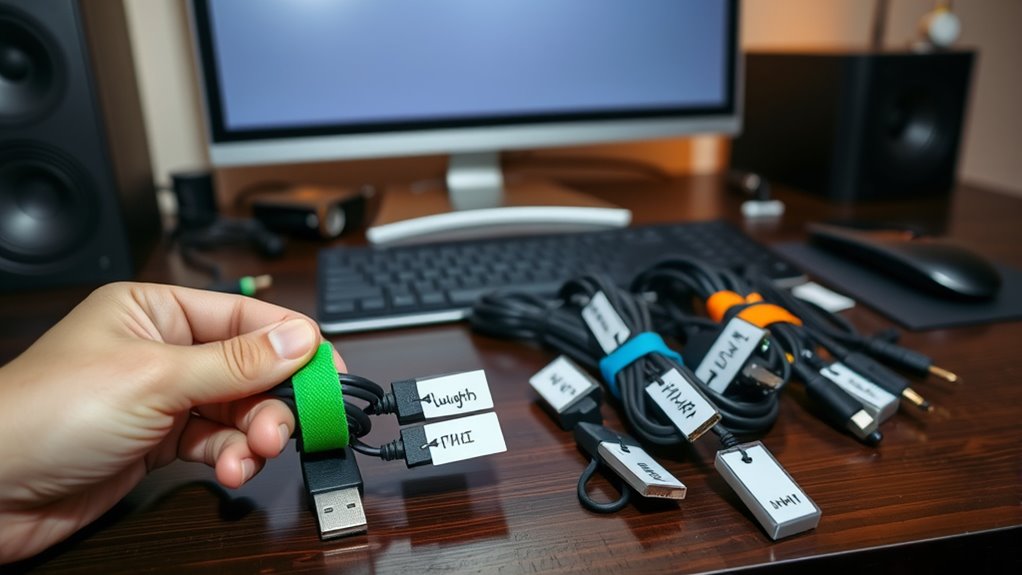

To avoid unplugging the wrong wire, use clear, standardized labels with unique identifiers for each cable, including device name and function. Apply durable labels at both ends near connectors, with bright color-coding for quick identification. Incorporate visual tools like barcodes or QR codes linked to digital records for added accuracy. Regularly update your labels and documentation. Keep track of high-density cables with systematic management, so you can stay confident you’re pulling the right wire every time. Keep reading to learn some expert tricks.

Get the little things that make your day delivered free — and shop member deals
- Fast, free delivery on millions of items
- Access to Prime Big Deal Days deals on October 6–7
- Prime Video, Amazon Music and more included
Key Takeaways
- Use color-coded labels to instantly identify different cables and prevent misunplugging.
- Label both ends of each cable with clear, durable tags for quick, accurate recognition during maintenance.
- Incorporate barcodes or QR codes linked to digital records for verification before unplugging.
- Standardize label placement near connectors and in visible areas to ensure labels are always accessible.
- Maintain an organized, updated documentation system to track cable functions and prevent accidental disconnections.
As an affiliate, we earn on qualifying purchases.
Standardized Labeling Formats and Color-Coding Strategies
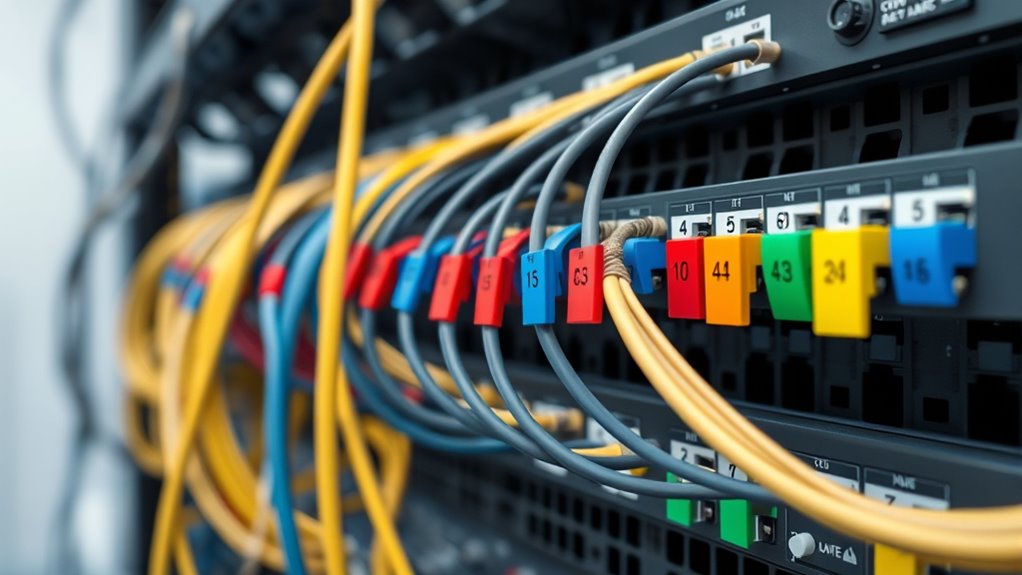
To guarantee consistency and ease of management, adopting standardized labeling formats like ANSI/TIA-606-B is essential. This ensures all cables follow a uniform system, making identification straightforward. You should include unique identifiers such as device name, port number, and function on every label. Applying a consistent color-coding scheme helps distinguish different cable types or functions at a glance, reducing errors. Make sure your labels are machine-readable and legible from a distance, so technicians can quickly identify connections without hassle. Regularly update your standards whenever new equipment or cable types are added. Consistent use of formats and colors streamlines maintenance, troubleshooting, and documentation, keeping your infrastructure organized and efficient. Adherence to these standards minimizes confusion and improves overall management. Additionally, understanding cable identification practices can further enhance your labeling effectiveness.
As an affiliate, we earn on qualifying purchases.
Optimal Label Placement and Material Choices
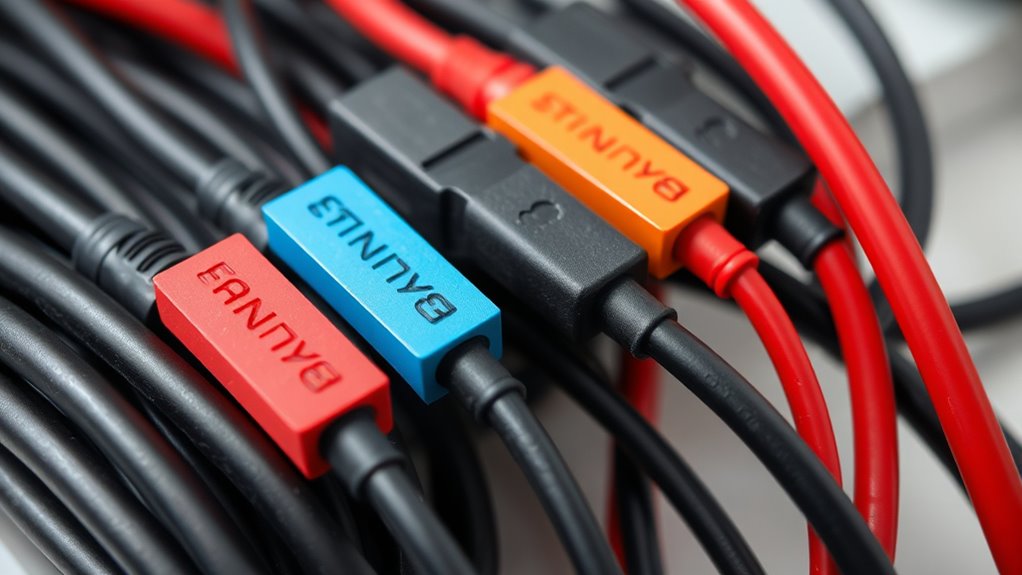
To guarantee quick identification, you should carefully choose the best locations for your labels, placing them at both ends of each cable and near connectors. Selecting durable, heat- and abrasion-resistant materials guarantees labels stay intact over time, even in harsh environments. By focusing on strategic placement and strong materials, you make maintenance and troubleshooting more efficient and reliable. Additionally, ensuring labels are resistant to environmental factors helps maintain their clarity and durability over the long term.
Strategic Label Positioning
Strategic label positioning is essential for quick and easy cable identification, especially in complex setups. You want labels where they’re visible and accessible, avoiding areas prone to damage or obstruction. Place labels near connectors on both ends for clarity, but ensure they aren’t hidden by bends or hardware. Use durable materials resistant to heat, abrasion, and fading, so labels stay legible over time. Consider label placement options based on cable routing—horizontal or vertical—so they’re easy to read in any orientation. Proper positioning reduces confusion and speeds troubleshooting. Here’s a quick guide:
| Placement Tip | Material Choice |
|---|---|
| Near connectors for visibility | Weatherproof, non-fading labels |
| Avoid bends or stress points | Heat-resistant, adhesive labels |
| Readable from all angles | Flexible, durable materials |
| Consistent label positioning | Color-coded or standardized placement |
Additionally, understanding the importance of label durability can help maintain clarity over the lifespan of the cables.
Durable Material Selection
Choosing durable label materials directly impacts the longevity and readability of your cable identifications. You want labels that withstand heat, abrasion, and constant handling without fading or tearing. Select high-quality, adhesive-backed labels made from weatherproof, tear-resistant materials like polyester or vinyl. These materials resist moisture, chemicals, and temperature fluctuations, ensuring your labels stay intact over time. For a permanent solution, consider heat-shrink tubing with printed labels, which provides tamper resistance and durability. Use labels with strong adhesives that won’t peel or slide, especially in high-traffic or industrial environments. When choosing materials, prioritize those that remain legible from a distance and resist fading under UV exposure. This ensures your labels stay clear and effective, simplifying cable identification during maintenance and troubleshooting.
As an affiliate, we earn on qualifying purchases.
Leveraging Technology for Accurate Cable Documentation
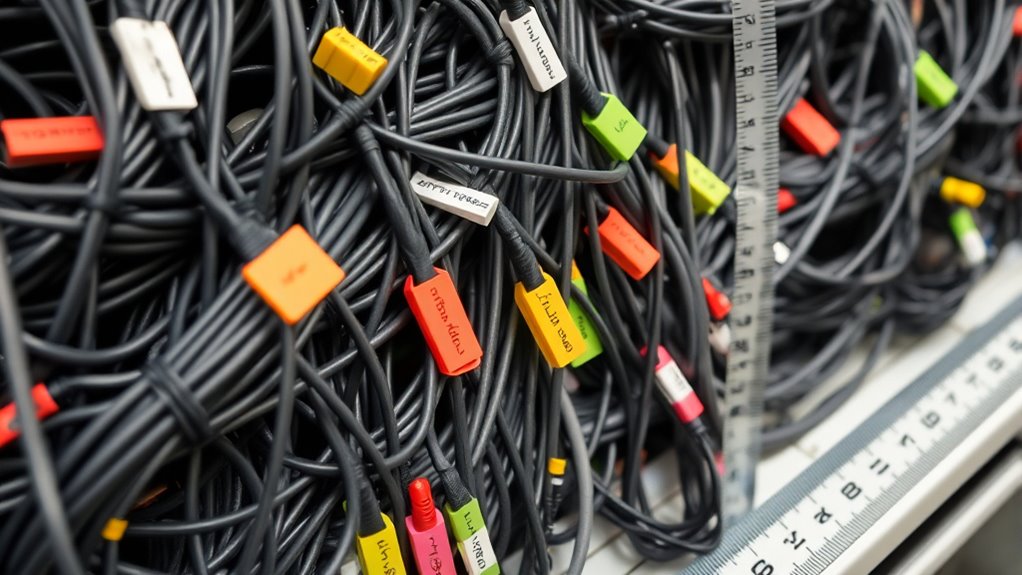
Leveraging technology substantially enhances the accuracy and efficiency of cable documentation. You can use barcode or QR code labels linked to a digital database, allowing quick scanning to verify connections and details. Implementing DCIM software automates tracking, generates visual maps, and keeps records current, reducing human error. Digital tools enable you to update cable info instantly when changes occur, ensuring documentation stays reliable. Using industrial-grade label printers and durable labels ensures that physical labels match digital records over time. Regular audits with software help identify discrepancies, preventing confusion during maintenance. Additionally, understanding affiliate disclosure policies ensures transparency and trust when adopting new technologies. Combining these technologies streamlines management, reduces time spent searching for cables, and minimizes mistakes, making your cable documentation precise, consistent, and easy to access.
Durable cable labels for organization
As an affiliate, we earn on qualifying purchases.
As an affiliate, we earn on qualifying purchases.
Practical Tips for Troubleshooting and Maintenance Labeling
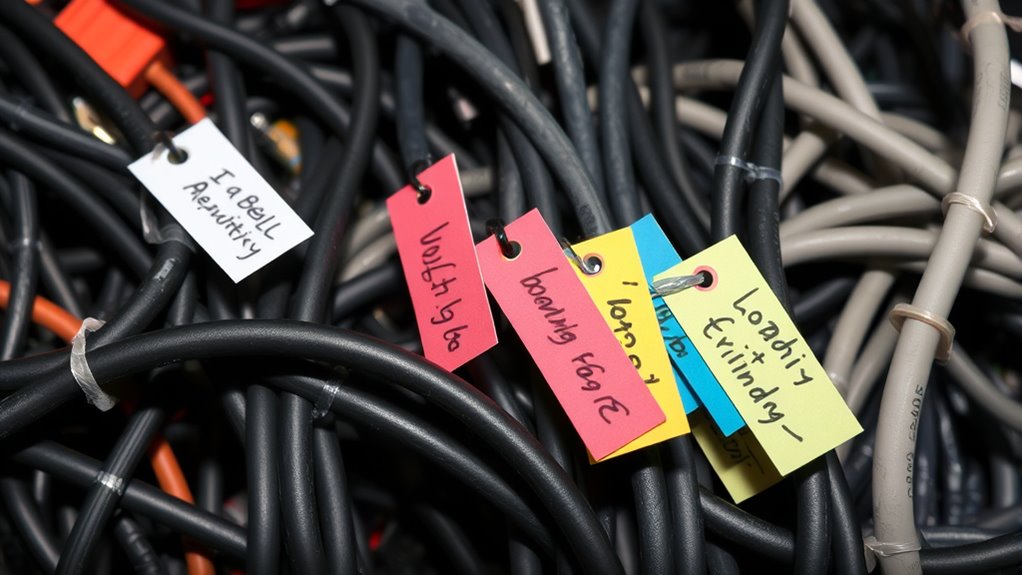
Effective troubleshooting and maintenance start with clear, accurate labeling that guides you quickly to the problem area. Proper labels help you identify cables at a glance, saving time and reducing errors. To guarantee effective labeling:
- Use standardized formats to maintain consistency across all cables.
- Include essential info like circuit ID, VLAN, or function for easy reference.
- Place labels at both ends of each cable for quick identification.
- Regularly update labels and documentation to reflect changes or repairs.
- Incorporate essential information such as cable type and installation date to enhance clarity and management.
Managing Labels in High-Density Environments
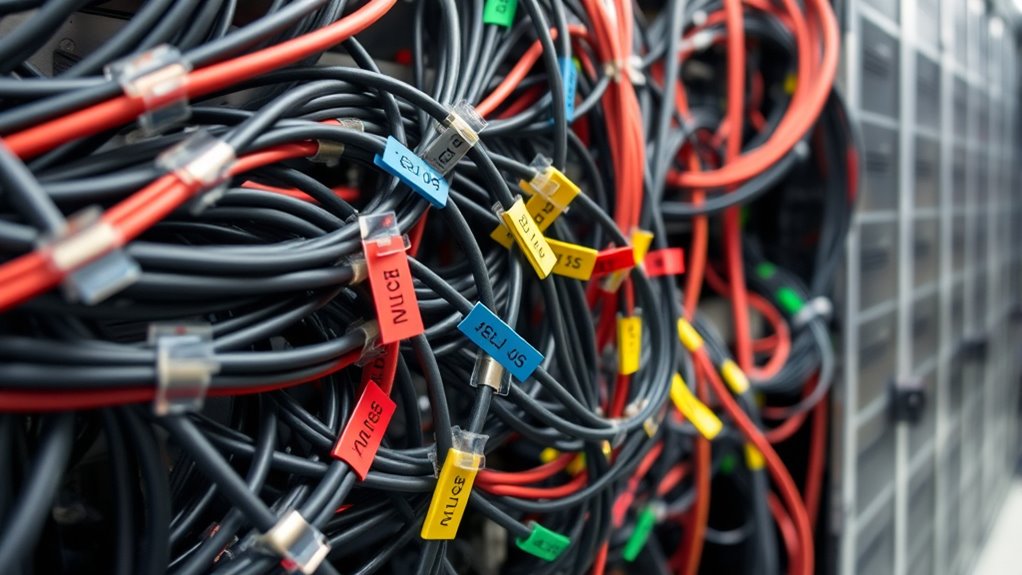
Managing labels in high-density environments requires meticulous organization to prevent chaos and guarantee quick identification. You should establish a consistent labeling system, combining clear labels with color-coding for different zones or functions. Use vertical and horizontal cable management to keep labels visible and accessible. Limit labels to essential cables to avoid clutter. Regularly audit labels to remove outdated or duplicate ones. Incorporate a central database to track each cable’s details and locations. This ensures quick troubleshooting and reduces errors. To illustrate, consider this table:
| Zone | Cable Type | Identification |
|---|---|---|
| A | Power | PWR-A-01 |
| B | Data | DATA-B-02 |
| C | Backup | BACK-C-03 |
Proper management minimizes confusion, streamlines maintenance, and keeps your setup organized.
Best Practices for Ensuring Long-Term Label Durability
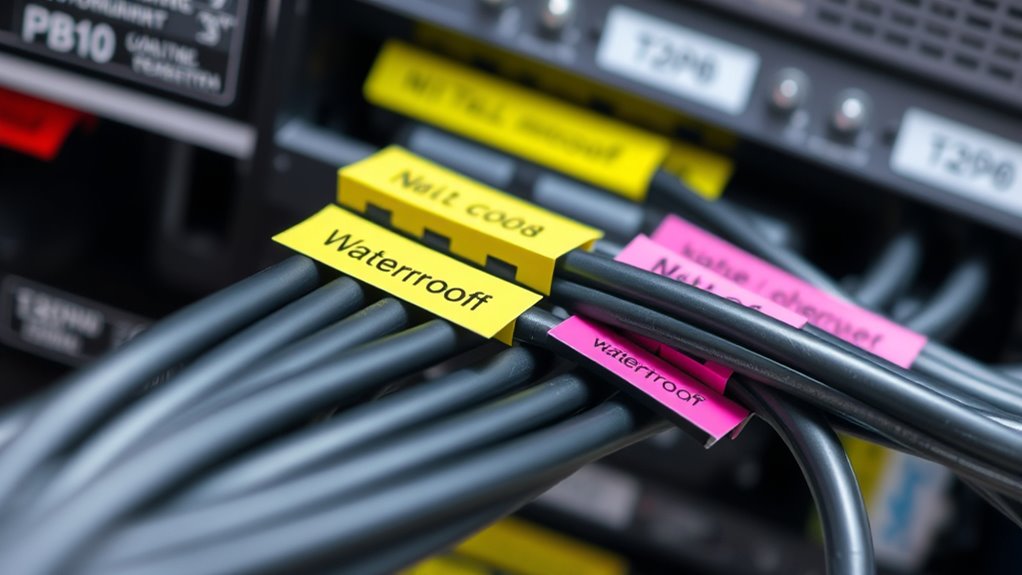
Guaranteeing long-term label durability requires selecting the right materials and proper application techniques from the start. To keep labels legible and intact over time, focus on the following:
- Use high-quality, heat- and abrasion-resistant label materials to withstand environmental stresses.
- Apply labels to clean, dry surfaces to ensure strong adhesion and prevent peeling.
- Opt for industrial-grade, adhesive-backed labels or heat-shrink tubing for added permanence.
- Regularly inspect labels and replace any that show signs of wear, fading, or damage.
- Incorporate environmental durability considerations into your labeling process to ensure labels withstand temperature fluctuations and humidity over time.
Frequently Asked Questions
How Often Should Cable Labels Be Inspected for Readability?
You should inspect your cable labels at least every six months to guarantee they stay readable. Regular checks help you catch fading, peeling, or damage early, preventing confusion during maintenance or troubleshooting. If you work in a high-density or busy environment, consider inspecting monthly. Keep labels clean, replace any that are damaged, and update your documentation accordingly. Consistent inspections help maintain clarity and prevent accidental disconnections.
Can Color-Coding Schemes Be Customized for Specific Industry Standards?
Color-coding schemes act like a tailored wardrobe, fitting your industry’s unique style. You can customize them to match specific standards, making your labeling system both functional and intuitive. By choosing colors that align with your industry’s regulations or internal protocols, you create a seamless flow of information. This flexibility helps technicians quickly identify cables, reducing errors and streamlining maintenance, all while keeping your setup compliant and easy to navigate.
Are QR Codes Compatible With All Types of Labeling Materials?
QR codes are compatible with many labeling materials, but not all. You should use durable, heat-resistant, and abrasion-proof materials like weatherproof labels, heat-shrink tubing, or laminated paper to make sure scanning remains reliable over time. Avoid flimsy or porous materials that may cause QR codes to become unreadable due to wear or damage. Proper material selection guarantees your QR codes stay functional and scannable in various environments.
What Are the Best Practices for Updating Labels After Network Changes?
Think of your network as a garden that requires careful pruning. When you make changes, update your labels immediately, like marking new growth. Use your centralized database to reflect these adjustments, ensuring labels on cables match your documentation. Replace temporary labels with permanent ones once verified, and color-code or add notes for clarity. Regularly audit and clean up outdated labels to keep your network’s landscape organized and easy to maintain.
How Can Labeling Impact Troubleshooting Efficiency in Complex Setups?
Labeling considerably boosts troubleshooting efficiency by making it quick and easy to identify cables and connections. When each cable is clearly labeled with relevant info, you spend less time searching and more time resolving issues. Proper labels help you instantly pinpoint problem areas, avoid unplugging the wrong wires, and streamline repairs. Consistent, visible labeling minimizes errors, reduces downtime, and keeps your network running smoothly, especially in complex setups.
Conclusion
By applying clear labeling, color-coding, and leveraging technology, you can considerably reduce cable mix-ups. For instance, studies show that proper labeling cuts troubleshooting time by up to 50%. Staying consistent with placement and choosing durable materials ensures your labels last. Implement these best practices, especially in dense setups, to keep your wiring organized and easily identifiable. Ultimately, a well-labeled system saves you time, reduces errors, and keeps your network running smoothly.
NFL season / tailgating Picks
team gear
As an affiliate, we earn on qualifying purchases.