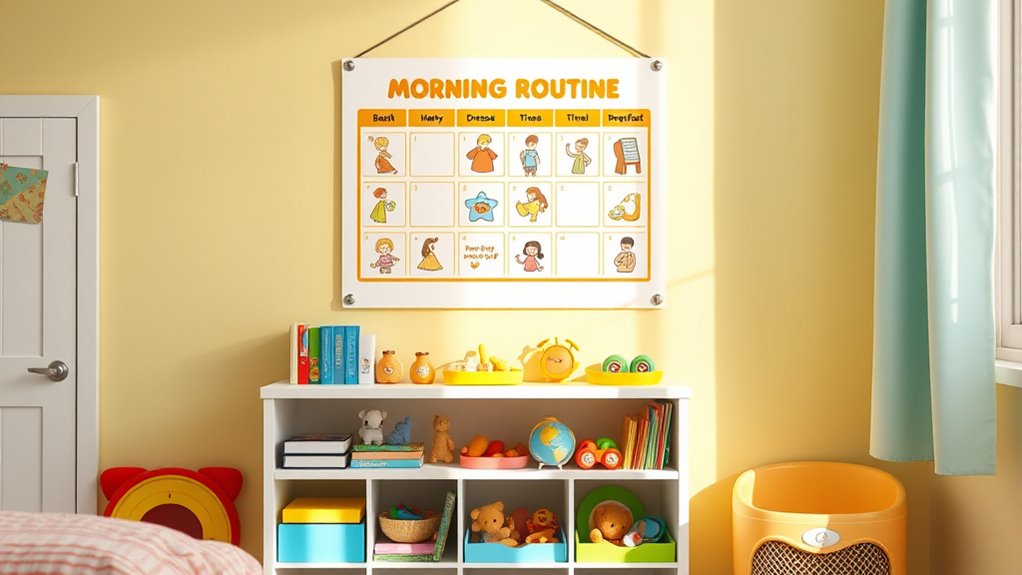

Creating a morning and evening routine chart helps you organize your kids’ daily tasks, making mornings smoother and less chaotic. By using visual cues and involving your children in designing the chart, you boost their independence and confidence. This predictable structure promotes responsibility and reduces power struggles, while also encouraging important skills like time management. Keep it simple and adaptable. Stay with us, as you’ll discover tips to craft effective routines that make every day easier for your family.

Get the little things that make your day delivered free with Prime
- Fast, free delivery on millions of items
- Prime Video, Amazon Music and more included
- Member-only deals all year
Key Takeaways
- Create a visual chart with clear icons for morning and evening tasks to promote independence.
- Involve children in designing the routine chart to boost ownership and engagement.
- Use bright colors, checkboxes, or Velcro tabs for easy task tracking and active participation.
- Incorporate visual aids like projectors or images to make routines more engaging and understandable.
- Maintain a simple, adaptable layout to accommodate changing schedules and ensure consistency.
As an affiliate, we earn on qualifying purchases.
Benefits of Using a Morning Routine Chart for Kids

Using a morning routine chart offers numerous benefits for kids, starting with fostering their independence. When you provide a visual guide, your child learns to complete daily tasks on their own, boosting confidence and self-sufficiency. It helps them understand what needs to be done without constant reminders, making mornings smoother for everyone. The chart also establishes consistency, giving your child a predictable structure that makes them feel secure and in control. As they check off completed tasks, they develop a sense of responsibility and accomplishment. This routine reduces chaos and power struggles, creating a more relaxed start to the day. Over time, your child builds essential time management skills that serve them well in school and beyond. Additionally, incorporating visual aids like projectors can make the routine more engaging and easier to follow.
As an affiliate, we earn on qualifying purchases.
Tips for Creating and Implementing an Effective Routine Chart

Creating an effective routine chart starts with involving your child in the design process. When they help choose pictures, colors, or tasks, they feel a sense of ownership and motivation. To guarantee success, keep these tips in mind:
Involving your child in designing the routine chart fosters ownership and boosts motivation.
- Use bright, simple visuals that catch your child’s eye and make tasks clear.
- Incorporate checkboxes or Velcro tabs so they can actively mark completed tasks.
- Personalize the chart with your child’s input to boost engagement and pride.
- Keep the layout simple and adaptable to your family’s changing schedule.
- Including visual aids like colorful images or icons can make the chart more appealing and easier for your child to understand.
As an affiliate, we earn on qualifying purchases.
Frequently Asked Questions
How Can I Customize a Routine Chart for Different Age Groups?
To customize a routine chart for different age groups, you should tailor tasks to their developmental abilities. For younger kids, use simple pictures and checkboxes, making tasks easy to understand and complete. For older children, incorporate more detailed steps and written cues. Adjust the layout with colorful visuals for younger kids and cleaner designs for older ones. Keep it flexible to accommodate individual needs and preferences, ensuring they stay engaged and motivated.
What Are the Best Materials for Durable, Reusable Charts?
Imagine this: your kids’ routine charts are as sturdy as a knight’s armor. The best materials are laminate or durable plastic, which withstands daily wear and tear. You can also use laminated paper with Velcro or dry erase surfaces for easy updates. These materials make the charts reusable, wipe clean, and kid-proof, ensuring they stay vibrant through countless mornings. Opt for thick, high-quality materials to keep your routines running smoothly.
How Do I Introduce the Chart to My Child Effectively?
You introduce the chart by explaining its purpose and showing how it works in a calm, positive way. Let your child help customize it with their favorite colors or pictures to boost ownership. Demonstrate each task, praise their efforts, and start with a few simple steps. Use gentle reminders and celebrate progress to build confidence. Over time, reinforce routines with encouragement, making the experience fun and rewarding.
What Incentives Motivate Children to Complete Routines?
“You catch more bees with honey,” and rewards motivate kids to complete routines. Use fun incentives like stickers, small treats, or extra playtime to encourage consistency. Praise their efforts sincerely to boost confidence. Keep rewards simple and immediate, so your child sees the positive connection. As they succeed, they’ll develop intrinsic motivation, making routine completion feel rewarding beyond just the incentive.
How Can I Modify the Chart for Children With Special Needs?
You can modify the chart for children with special needs by incorporating clear, simple visuals and icons tailored to their abilities, ensuring tasks are broken down into smaller steps. Use tactile elements or textured stickers for engagement, and personalize the layout to suit their preferences. Keep the design consistent, and add extra time or support as needed. Collaborate with therapists or specialists to adapt the chart effectively and encourage independence.
As an affiliate, we earn on qualifying purchases.
Conclusion
By using a morning routine chart, you’ll transform chaotic mornings into a well-oiled machine that runs smoother than a racecar! Say goodbye to endless nagging and forgotten shoes, and hello to peaceful, organized days where your kids become mini superheroes of independence. With just a simple chart, you’ll gain superpowers like patience and calm, turning every morning from a battle into a celebration. Get ready to conquer mornings like a true superhero parent!
NFL season / tailgating Picks
team gear
As an affiliate, we earn on qualifying purchases.