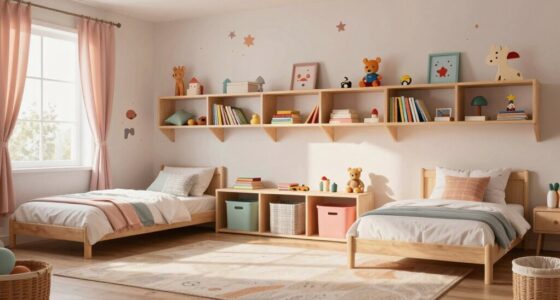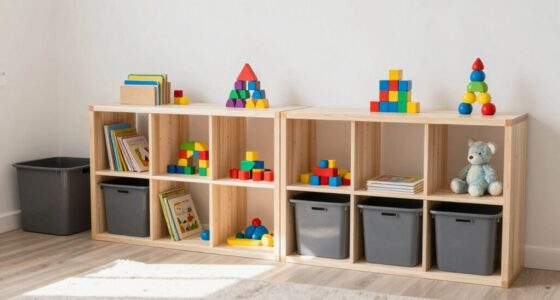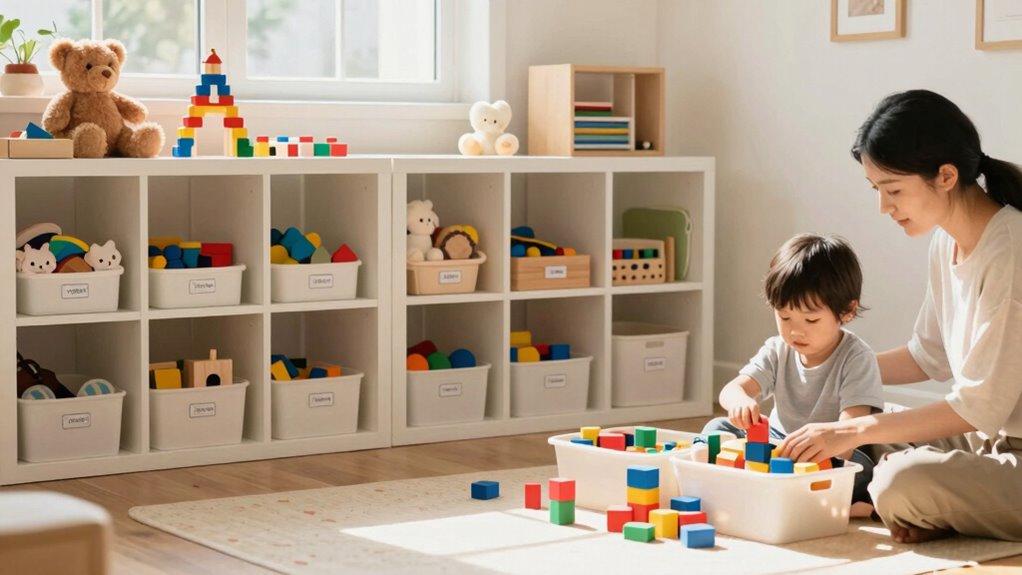

Toy rotation helps reduce overwhelm by limiting the number of toys your child has access to at once, making it easier for them to focus and stay organized. When fewer toys are available, cleanup becomes simpler and less stressful, encouraging independence. It also prevents clutter, which can be overwhelming for sensitive children. As they learn to manage their toys, they develop important skills like organization and responsibility—discover how this approach supports their growth and daily routines.

Get the little things that make your day delivered free with Prime
- Fast, free delivery on millions of items
- Prime Video, Amazon Music and more included
- Member-only deals all year
Key Takeaways
- Limits the number of toys accessible at once, reducing visual and sensory overload.
- Simplifies cleanup by focusing on smaller, manageable groups of toys.
- Encourages organized storage, making tidying quick and less stressful.
- Prevents boredom, decreasing resistance and tantrums during cleanup.
- Creates a predictable routine, helping children feel more in control and less overwhelmed.
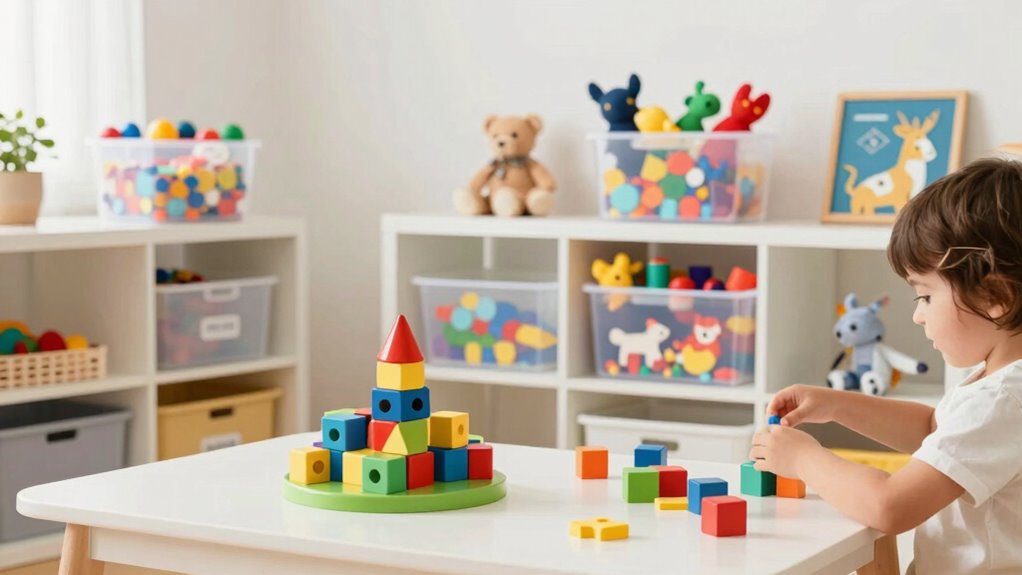
Toy rotation can substantially boost your child’s development and keep playtime fresh and exciting. When you implement a toy rotation system, you’re not just managing clutter—you’re actively supporting your child’s growth and learning. One of the biggest benefits is that it simplifies storage solutions, making cleanup easier and less overwhelming. Instead of having all toys scattered across the room, you can organize them into manageable groups stored in bins, shelves, or baskets. When it’s time to switch, you swap out toys, which reduces the sheer number of items your child has access to at once. This method prevents the chaos that often comes with endless toys lying around and helps your child focus on fewer, more meaningful playthings. As a result, cleanup becomes quicker and less stressful for both of you.
Beyond tidiness, toy rotation promotes significant developmental benefits. When your child has limited toys at any given time, they tend to engage more deeply with each item. This encourages creativity, problem-solving, and concentration, rather than mindless distraction. Rotating toys also introduces variety, sparking your child’s curiosity and motivation to explore new activities. It’s an excellent way to promote learning because you can tailor the toys to their current interests and developmental stage, gradually introducing new challenges as they grow. Moreover, regular rotation prevents boredom, which often leads to tantrums or resistance during cleanup. Instead, your child looks forward to discovering a new set of toys, making the switch from play to tidy-up smoother and more positive. Incorporating toy organization strategies can further enhance this process by keeping everything accessible and orderly. This approach aligns with the importance of understanding biodiversity, as it encourages awareness of different types of objects and their roles in a balanced environment. Additionally, organized playspaces can foster independence and help children learn to manage their belongings better.
The process of switching toys also teaches your child valuable life skills like organization and responsibility. As they help you put away toys and decide what to rotate, they learn to value their belongings and develop good habits early on. Fewer toys accessible at once means they’re less likely to become overwhelmed or overstimulated, especially if they’re sensitive to clutter or chaotic environments. This calm, organized approach to playtime and cleanup fosters a sense of order and control, reducing stress for everyone involved. Creating a structured environment can further support your child’s ability to develop routines and self-discipline. When children are involved in the process, they can also learn about age-appropriate expectations and limits, which is essential for healthy development. The overall effect is a more manageable, enjoyable routine where your child feels empowered and engaged. Toy rotation isn’t just about keeping things tidy—it’s a strategic tool that supports your child’s emotional, social, and cognitive development while making your life easier.
As an affiliate, we earn on qualifying purchases.
Frequently Asked Questions
How Often Should I Rotate My Child’s Toys?
You should rotate your child’s toys every 2 to 4 weeks to keep toy selection fresh and engaging. This schedule prevents overwhelm by reducing clutter and makes cleanup easier. Observe your child’s interest levels—if they seem bored or overwhelmed, consider more frequent rotations. A consistent rotation schedule helps maintain excitement around toys, encourages better organization, and keeps playtime enjoyable without feeling chaotic or overwhelming for your little one.
What if My Child Resists Toy Rotation?
If your child resists toy rotation, don’t get discouraged. You can try effective strategies like explaining the benefits, involving them in selecting toys, or making it a fun game. Acknowledge their feelings and gradually introduce new toy sets. Over time, your child may become more receptive. Patience and consistency help reduce child resistance, making toy rotation a positive experience that minimizes overwhelm and encourages their independence and creativity.
Can Toy Rotation Help With Sibling Sharing Issues?
Research shows that children with fewer toys tend to share better. Toy rotation can ease sibling jealousy by limiting access, encouraging sharing strategies, and reducing competition. When you rotate toys, kids focus on a smaller set, making sharing more manageable and less stressful. This approach helps children develop patience and cooperation, making sibling interactions smoother. You’ll notice less conflict and more positive play as they learn to share and respect each other’s space.
How Do I Store Toys During Rotation Periods?
To store toys during rotation periods, use effective toy organization and storage solutions. You can gather toys into labeled bins, baskets, or clear containers, making it easy to see what’s inside. Store the toys in a closet, under the bed, or on high shelves to keep them out of sight but accessible. Rotating toys in and out keeps your space tidy and prevents overwhelm, making cleanup quicker and easier for you and your child.
Does Toy Rotation Reduce Overall Toy Clutter?
Toy rotation is like giving your child’s room a revitalizing breeze, making it easier to manage. By regularly swapping toys, you reduce clutter and keep toy organization simple. This method prevents toys from piling up into chaos, giving your space a cleaner, more organized look. With consistent clutter management, your child can enjoy their toys more and cleanup becomes faster, turning chaos into calm.
children's toy rotation organizer
As an affiliate, we earn on qualifying purchases.
As an affiliate, we earn on qualifying purchases.
Conclusion
By gently shifting your approach to toy rotation, you create a more serene and manageable environment for both you and your child. This subtle change helps reduce the cluttered chaos that can feel overwhelming, allowing for a calmer, more focused playtime. Embracing this thoughtful strategy transforms the daily routine into a more graceful dance of organization, fostering a sense of peace and simplicity. Ultimately, it’s a refined way to cultivate harmony within your home.
As an affiliate, we earn on qualifying purchases.
As an affiliate, we earn on qualifying purchases.
NFL season / tailgating Picks
team gear
As an affiliate, we earn on qualifying purchases.