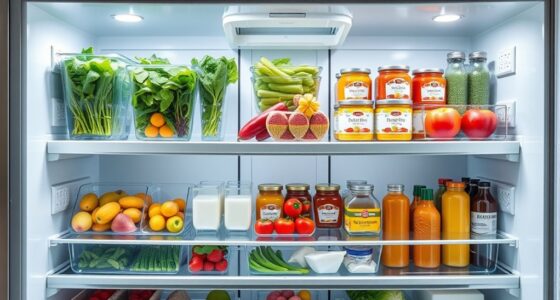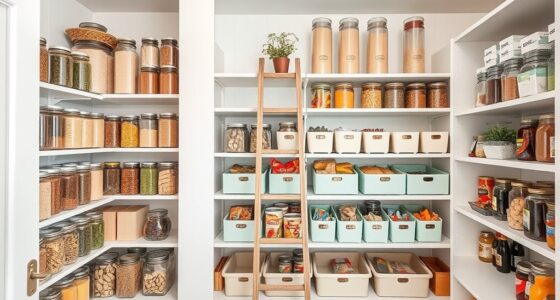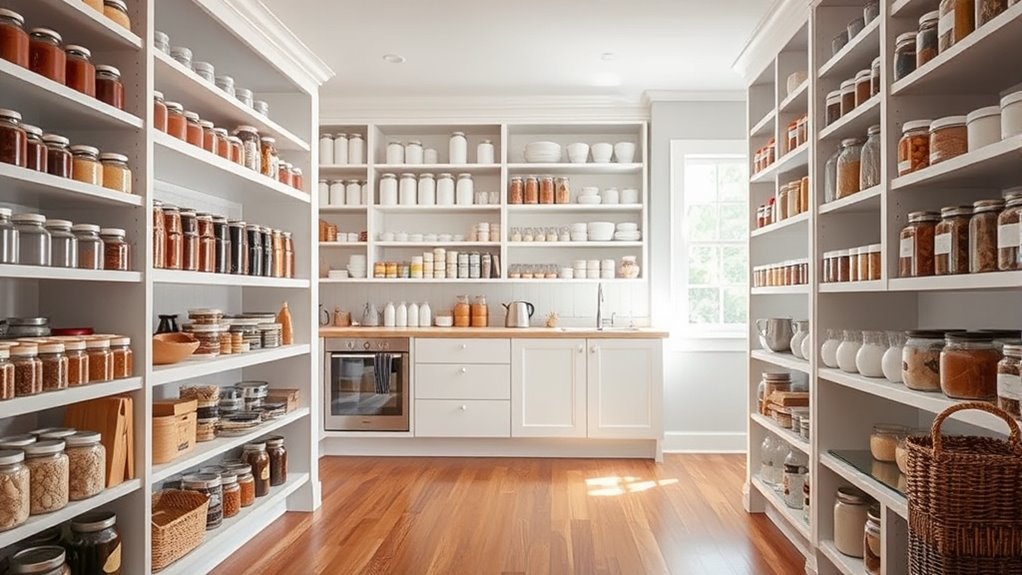

Start by removing everything from your pantry to clear space and see what you have. Clean the shelves thoroughly and toss expired or unused items. Group similar items together, then use inexpensive storage solutions like jars, baskets, or repurposed containers to create designated zones. Label everything for easy access and focus on placing frequently used items at eye level. Keep the momentum going with simple routines—continue exploring tips that will help keep your pantry organized long-term.
Key Takeaways
- Remove all items, discard expired or unused food, and clean shelves thoroughly for a fresh start.
- Group similar items and designate specific zones using affordable storage solutions like jars or baskets.
- Use labels or color-coded bins to clearly identify categories and improve visibility.
- Repurpose household items, such as jars or boxes, to maximize storage without extra cost.
- Establish regular maintenance routines, like weekly quick checks, to sustain organization and prevent clutter buildup.
Assessing Your Pantry’s Current State and Setting Goals
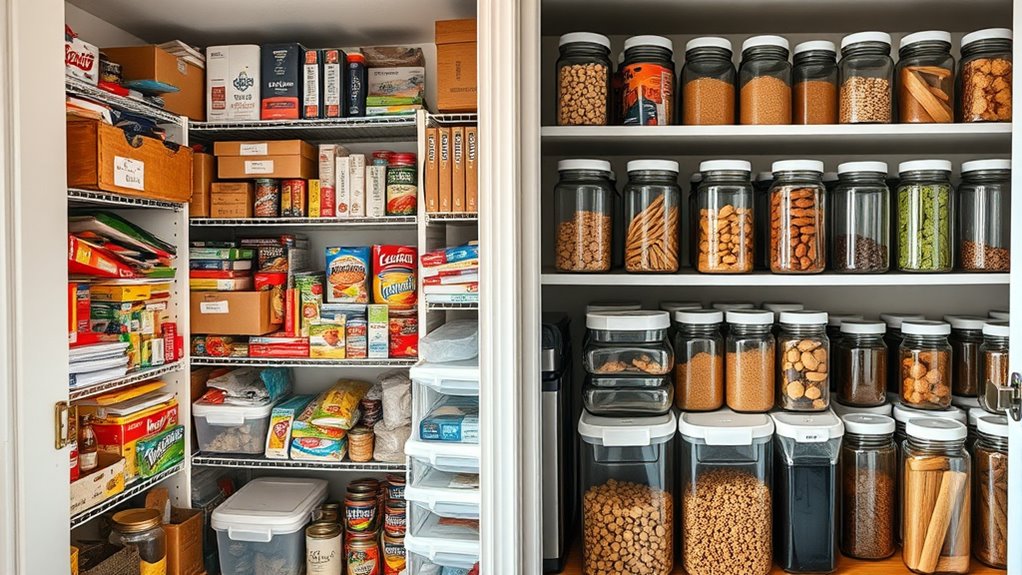
Before you begin your pantry makeover, it’s essential to evaluate your current space thoroughly. Take note of problem areas like cluttered shelves, expired food, or hard-to-reach items. Open all your pantry doors and remove everything, so you see exactly what you have. As you do this, identify items you rarely or never use and decide whether to keep, donate, or discard them. Observe the layout—are there spots that are difficult to access? Set clear goals for your makeover, such as maximizing storage, improving visibility, or creating zones for different food groups. Establishing these objectives helps you stay focused and plan effectively. A realistic assessment guarantees your project is manageable, saving you time and money during the transformation. Additionally, understanding storage optimization principles can help you make the most of your space and keep it organized long-term.
Clearing Out Clutter and Deep Cleaning

Start by removing everything from your pantry so you can see what you have and decide what to keep. As you sort through items, discard expired or unused food to clear space. Then, give your shelves a thorough cleaning to create a fresh, organized foundation for your makeover. Consider incorporating storage solutions to maximize space and maintain organization in your pantry.
Emptying and Sorting Items
Clearing out your pantry is the essential first step to a successful makeover, as it allows you to see exactly what you’re working with and identify problem areas. Remove every item from the shelves, placing them on a clean surface. As you do, discard expired, stale, or unused food to reduce clutter and prevent confusion. Sort remaining items into categories like snacks, canned goods, and baking supplies. This process helps you realize how much you have and highlights duplicates or items you no longer need. Be thorough, and take this opportunity to check expiration dates. Organize items into piles or bins based on their categories. This step clears space and sets the stage for a more efficient, accessible, and visually appealing pantry. Incorporating sustainable storage solutions can further enhance your pantry’s organization and eco-friendliness.
Thorough Shelf Cleaning
To thoroughly clean your pantry shelves, begin by removing all remaining items and inspecting for dust, crumbs, or sticky spots. Use a damp cloth or mild cleaner to wipe down every surface, paying attention to corners and edges where dirt hides. Check for spills or sticky residue and scrub these areas until they’re spotless. If shelves are adjustable or removable, take them out for a deeper clean. Don’t forget to clean any shelf brackets, dividers, or sliders. Dry everything thoroughly before replacing items or adding storage solutions. This deep cleaning not only removes grime but also reveals hidden dust or pests, ensuring your pantry stays fresh and hygienic. A clean shelf creates a solid foundation for organizing your food more efficiently. Regular cleaning routines help maintain a clutter-free environment and prevent buildup over time.
Categorizing and Planning Your Organization Strategy

Start by grouping similar items together to create clear categories, like snacks, canned goods, or baking supplies. Then, designate specific zones in your pantry for each group to keep everything organized and easy to find. This approach helps you plan your space efficiently and maintain a tidy, functional pantry.
Group Similar Items Together
Grouping similar items together is a essential step in creating an organized and functional pantry. When you categorize items like snacks, canned goods, or baking supplies, you streamline access and reduce clutter. Start by gathering all your products and sorting them into broad groups. Use clear containers or baskets for each category, making it easy to see what you have at a glance. Place frequently used items at eye level for quick grab-and-go access, while less-used items can go on higher or lower shelves. Label each container or section to maintain clarity and prevent future chaos. This method not only simplifies your shopping list but also helps you spot expired or unused items faster. Overall, grouping similar items creates a more efficient, accessible, and tidy pantry space. Incorporating proper storage solutions can further enhance organization and accessibility.
Designate Clear Zones
Designating clear zones in your pantry helps create a logical flow and makes it easier to find and store items. Start by identifying the main categories you use daily, like snacks, baking supplies, canned goods, and breakfast items. Assign specific areas for each category, ensuring similar items stay together. Use shelf labels or color-coded bins to mark these zones, so everyone in your household understands the organization. Place frequently accessed items at eye level for quick reach, while less-used items can go on higher or lower shelves. This planning step minimizes clutter and saves time during meal prep. Clear zones streamline your pantry, making it simple to maintain and ensuring everything has a designated spot. The result is a more functional, accessible space you’ll enjoy.
Choosing Cost-Effective Storage Solutions
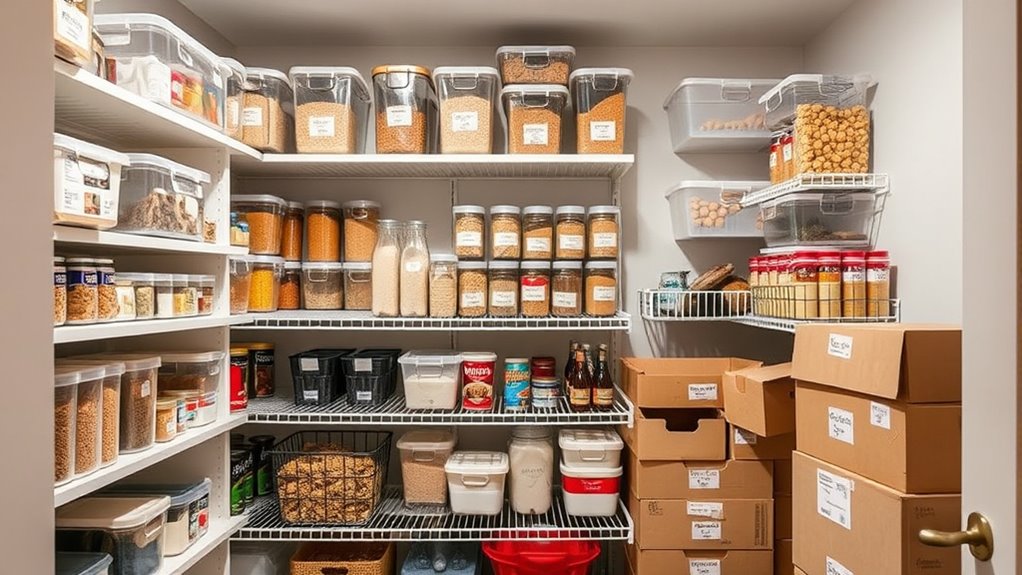
Choosing cost-effective storage solutions doesn’t mean you have to sacrifice organization or functionality. You can repurpose household items like jars, baskets, or boxes to store items neatly. Stackable bins and shelf risers help maximize vertical space without extra spending. Lazy Susans are affordable for spices and condiments, making them easy to access. Wire baskets are perfect for produce or frequently used snacks. Consider shopping secondhand or using free items from around your home to cut costs. Label everything clearly with inexpensive labels or masking tape to maintain order. Using simple, versatile solutions keeps your pantry tidy without a big investment. By thinking creatively, you’ll create a functional, organized space that fits your budget and meets your needs.
Executing the Makeover: Step-by-Step Transformation
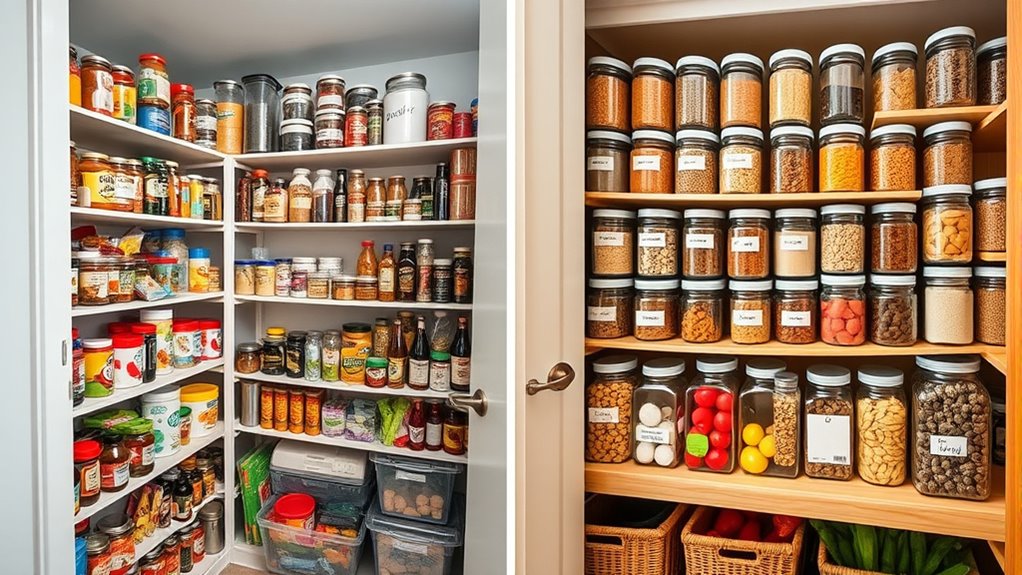
To successfully execute your pantry makeover, start by gathering all necessary supplies and setting aside dedicated time. Clear out the entire pantry, removing all items to create a blank canvas. As you do, discard expired or unused food to reduce clutter. Next, thoroughly clean shelves and surfaces, wiping away dust and spills. With a fresh space, follow your organizational plan: group similar items, label containers, and decide on placement based on frequency of use. Use clear bins, baskets, or repurposed containers to maximize space and visibility. Place everyday items at eye level for easy access, and store less-used goods higher or lower. Incorporate proper storage techniques to ensure your space remains organized and functional. Finally, restock your pantry carefully, making sure everything fits and is easy to find. This step-by-step process transforms chaos into order efficiently.
Maintaining Your Organized Pantry for Long-Term Success

Maintaining Your Organized Pantry for Long-Term Success requires consistent effort and simple habits. Regularly reassess your space, returning items to their designated spots. Make it a habit to discard expired or unused food monthly. Maintain labels on containers and shelves to guarantee everything stays visible and accessible. Encourage family members to put items back in the right place and avoid clutter buildup. Use the following table as a quick reference to keep your pantry tidy:
| Habit | Benefit |
|---|---|
| Weekly quick checks | Prevents clutter and expiration |
| Restocking with purpose | Keeps items organized and accessible |
| Label everything | Saves time and reduces mess |
| Reorganize monthly | Maintains efficiency and order |
| Involve everyone | Promotes shared responsibility |
Implementing habit formation techniques can help reinforce these routines and make pantry organization a lasting success.
Frequently Asked Questions
How Can I Prevent My Pantry From Becoming Cluttered Again?
To keep your pantry from becoming cluttered again, set up a routine for regular tidying and decluttering. Always return items to their designated spots after use, and avoid buying unnecessary duplicates. Use clear containers and labels for easy visibility, and periodically check for expired or unused food. Involve your family in maintaining organization, making it a shared responsibility that encourages ongoing neatness.
What Are the Best Reusable Containers for Budget-Friendly Storage?
Did you know that using reusable containers can cut your storage costs by up to 50%? For budget-friendly options, choose clear plastic bins, glass jars, or repurposed household containers like yogurt or pasta jars. These are affordable, durable, and easy to clean. Label them for quick access, and you’ll keep your pantry organized while saving money. Reusing items also reduces waste, making your space eco-friendly and efficient.
How Do I Organize a Pantry With Limited Vertical Space?
To organize a pantry with limited vertical space, start by using stackable storage bins and shelf risers to maximize every inch. Place frequently used items at eye level for easy access, and store less-used or bulk items on higher or lower shelves. Utilize lazy Susans for spices and small containers, and consider repurposing household items to create custom solutions. This approach keeps everything accessible and well-organized without needing extra vertical room.
Can I Do a Pantry Makeover Without Any DIY Skills?
Yes, you can definitely do a pantry makeover without DIY skills. Focus on simple strategies like decluttering, wiping down shelves, and using affordable storage solutions like clear bins or baskets. You can buy pre-made labels to organize items and place everything in logical categories. With a little time and effort, you’ll transform your pantry into a neat, functional space without needing any advanced DIY skills.
How Often Should I Reassess My Pantry Organization?
You should reassess your pantry organization every three to six months. Regular checks help you spot expired foods, adjust storage as needed, and keep everything tidy and accessible. When you notice clutter building up or items getting lost, it’s time for a quick tidy-up. Frequent reassessment keeps your pantry functional, saves you money, and makes meal prep smoother. Make it a simple routine to maintain an organized and efficient space.
Conclusion
With your pantry now a shining example of order, you’ve turned chaos into calm—like a sudden burst of sunshine breaking through clouds. Keep your space tidy by regularly reassessing and sticking to your organization plan. Remember, a well-organized pantry isn’t just a pretty sight; it’s a secret weapon for stress-free meals and savings. So, enjoy your new space and let it be the foundation for many delicious, clutter-free days ahead!